[Case 01]

Enhancing Travel Planning 25% More Bookings

EdTech

[Industry]

EdTech

[My Role]

UX designer

UX reseacher

[Platforms]

Desktop

[Timeline]

Sep - Dec, 2022

25% More Bookings Through Simplified Navigation

[Project Overview]

Content

[01. Intro]

Academic reading is a persistent challenge in graduate study.

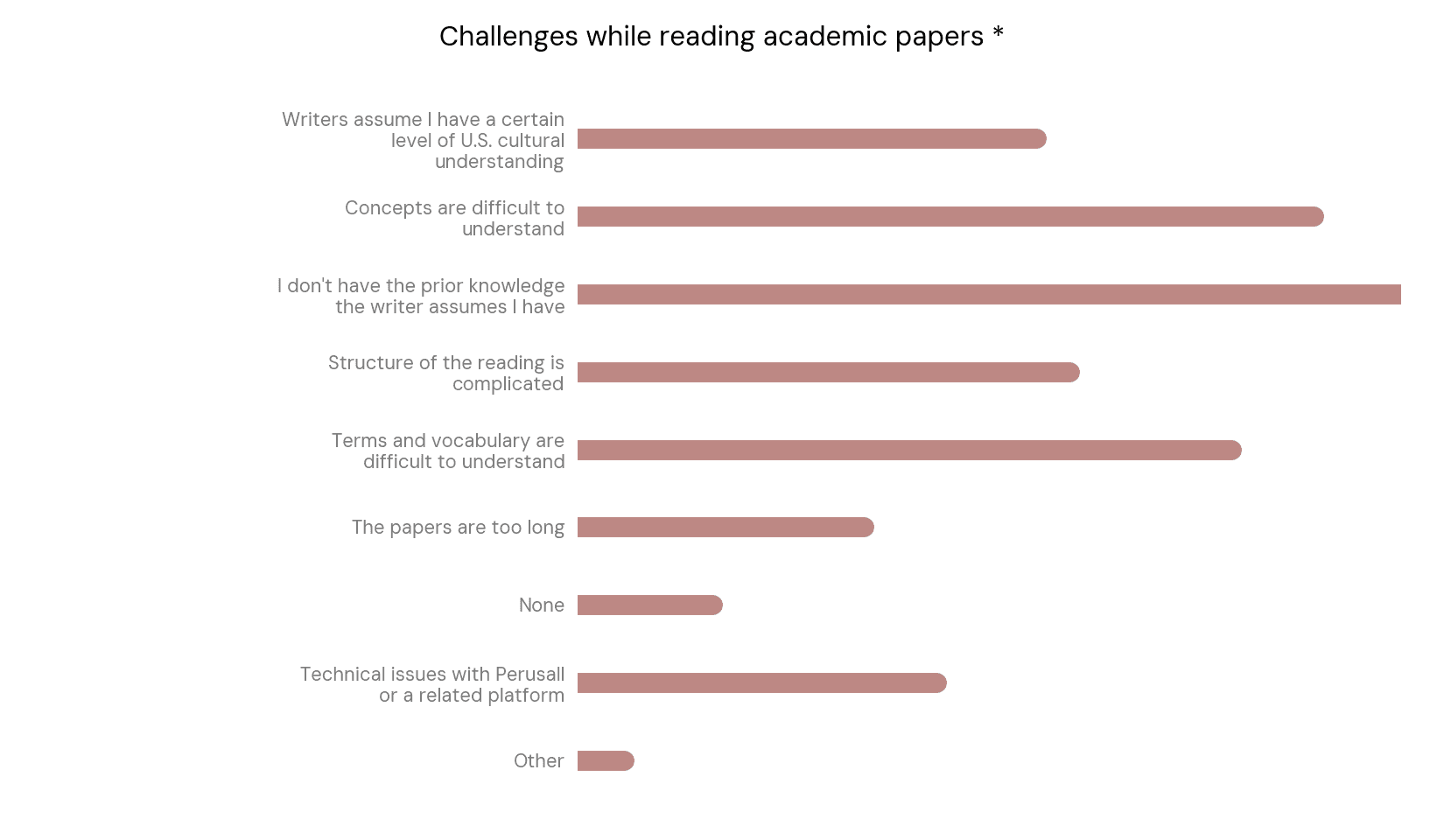
Since starting my graduate program, I kept hearing the same complaint from peers: the reading load was overwhelming. It wasn't just me struggling to keep up. Through an initial survey, we found that students consistently identified academic reading as difficult, particularly due to: unfamiliar terminology, complex academic language and dense conceptual content.

These findings confirmed that comprehension-related barriers are a real and recurring issue in students’ reading experience. Rather than stopping at this surface-level understanding, we used these results as a starting point to investigate how students currently manage these challenges in practice.

[02. Investigate the existing reading experience]

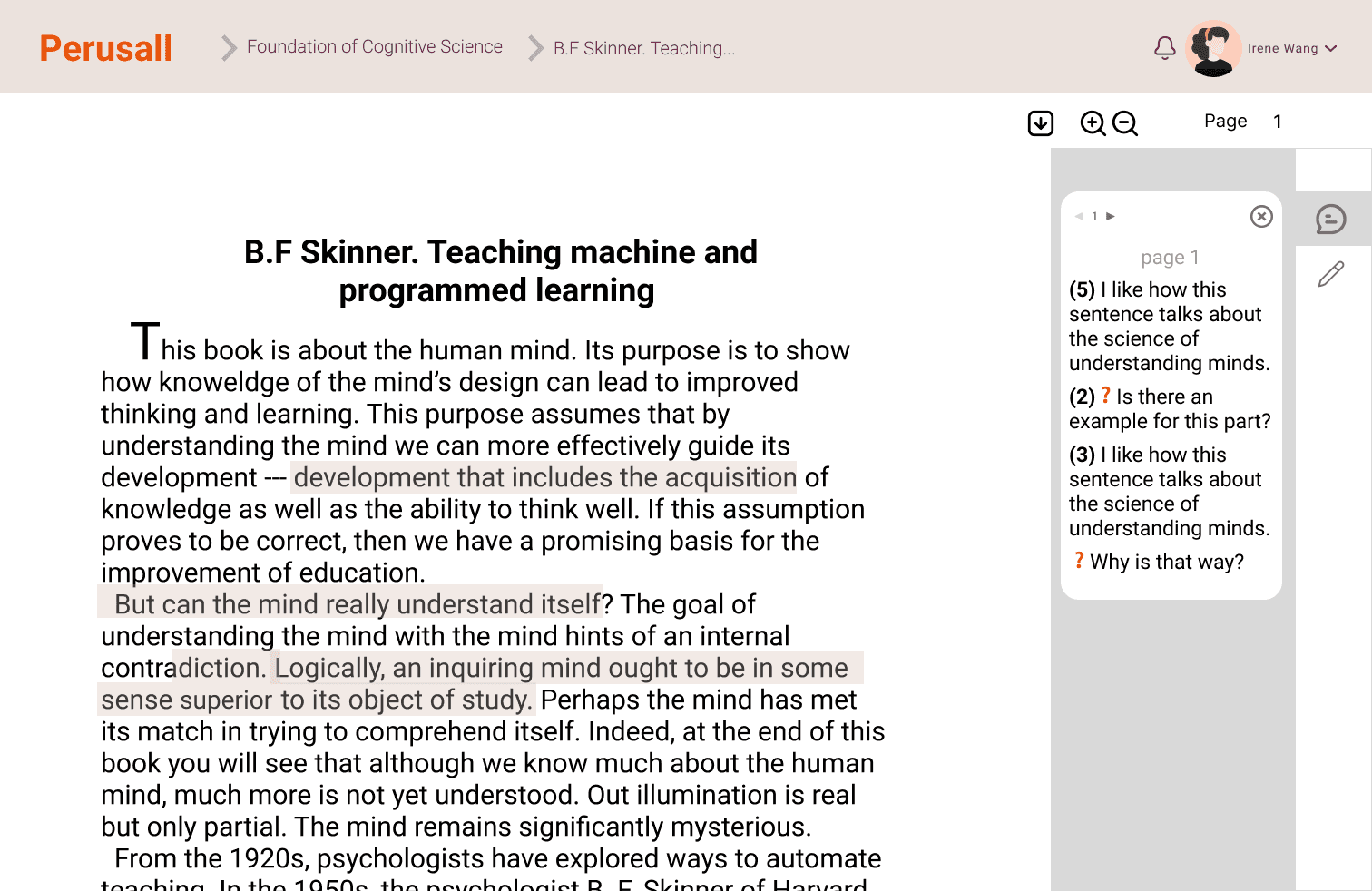
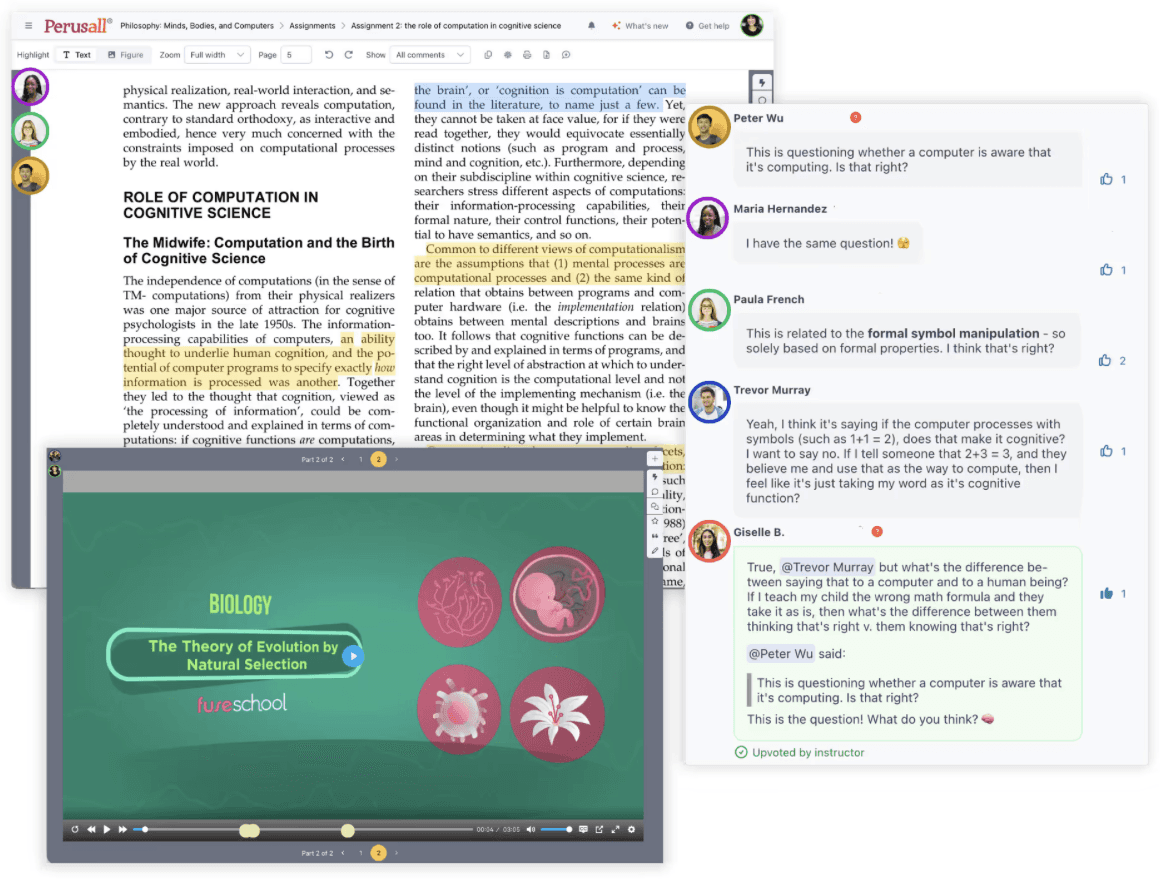
Perusall: a reading platform to help students navigate academic reading.

While our survey confirmed that academic reading is challenging, it also revealed an important part of the learning ecosystem already in place: Perusall. As a required platform in the program, Perusall is deeply embedded in students' reading workflows.

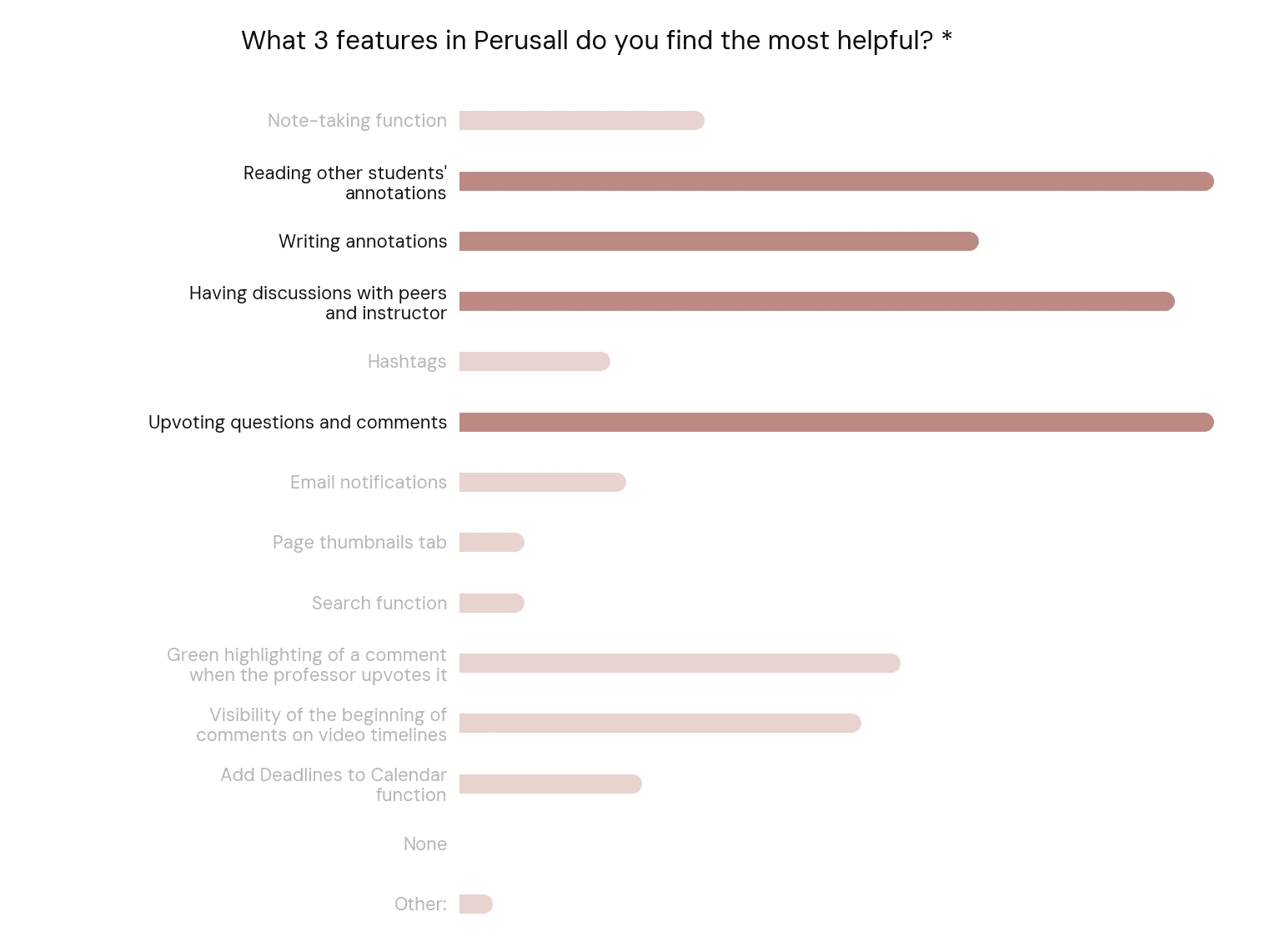
Students viewed Perusall as more than just a reading platform—it served as a collaborative learning space that allow students to do collaborative annotations and interactions within the content. When asked about the most useful features, students chose "reading other students' annotations", "Having discussions with peers and instructor" and "Writing annotations".


These responses suggest that peer insights and collaborative discussions provide the diverse perspectives and real-world examples needed to demystify complex concepts and improve students' comprehensions.

Where the reading experience breaks down…

To better understand how Perusall functions in practice, we conducted follow-up interviews focused on students’ reading experiences. Although students valued collaborative annotations, they also described some recurring frustrations.

Pain point

“Sometimes I need to wait a few days to get the reply from my peers. I understand, people have different schedules for reading and replying. But it often happen to me that I just don’t remember what I had asked when I receive a reply in like 3-4 days”

—Chloe

Pain point

“I feel overwhelmed if the paper is filled with annotations because it feels that the annotations are also part of the reading”

—Steve

Pain point

“ Compared with annotations on Perusall, I like group discussions in person “

—May

Pain point

“I spend long time to finish each readings because I have to read all the annotations. But honestly, sometimes you can tell the annotations are just for annotations….

—Kris

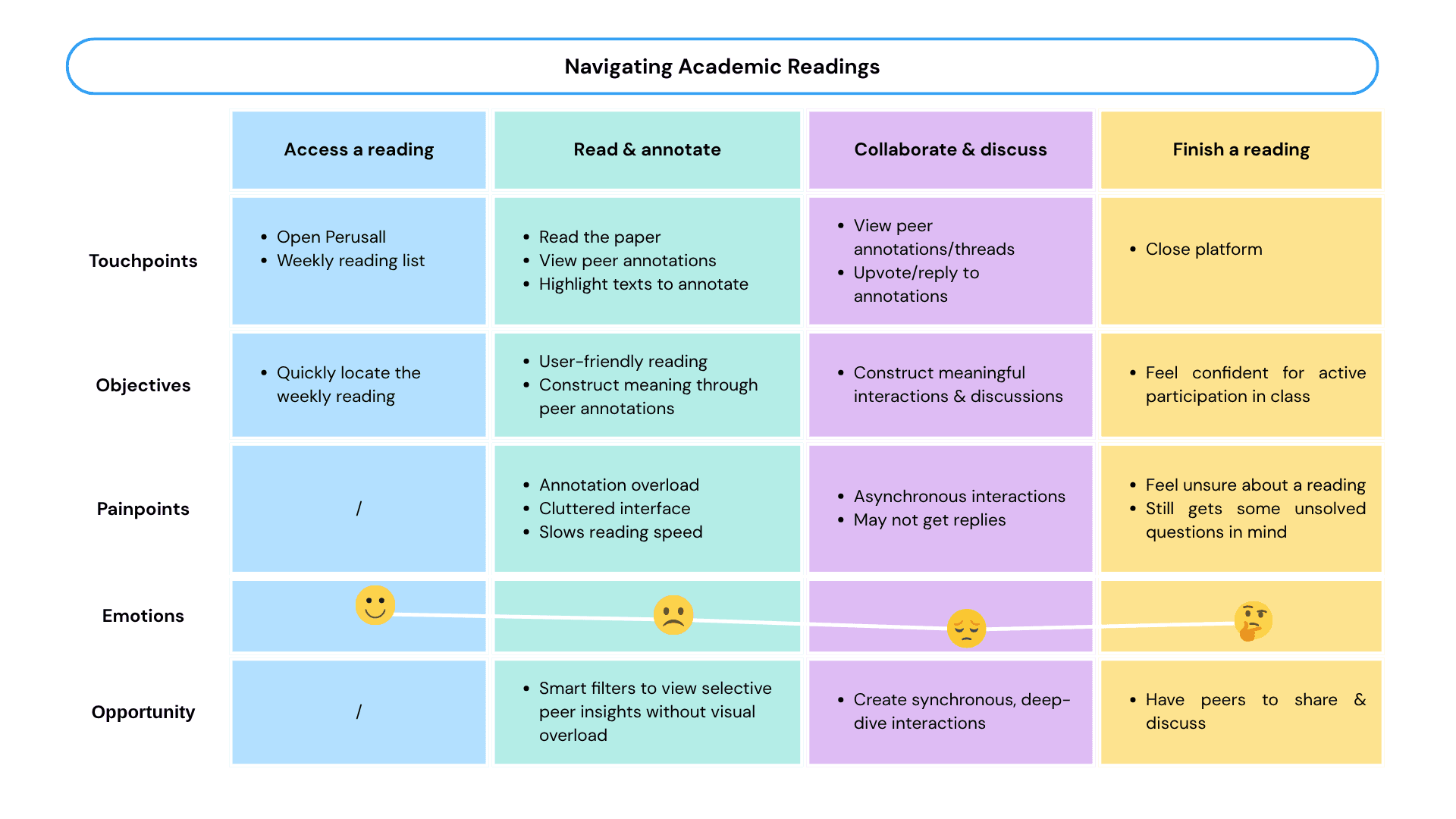
When we put these findings into student’s journey from receiving an assignment to completing a reading, we reveals two distinct friction points:

🗂️ Repetitive or irrelevant comments make the interface feel cluttered and disrupting students’ reading flow

⏳ Asynchronous collaboration limits opportunities for immediate clarification and real-time knowledge exchange

Defining the opportunities

After a full audit, we decided on the following tactics:

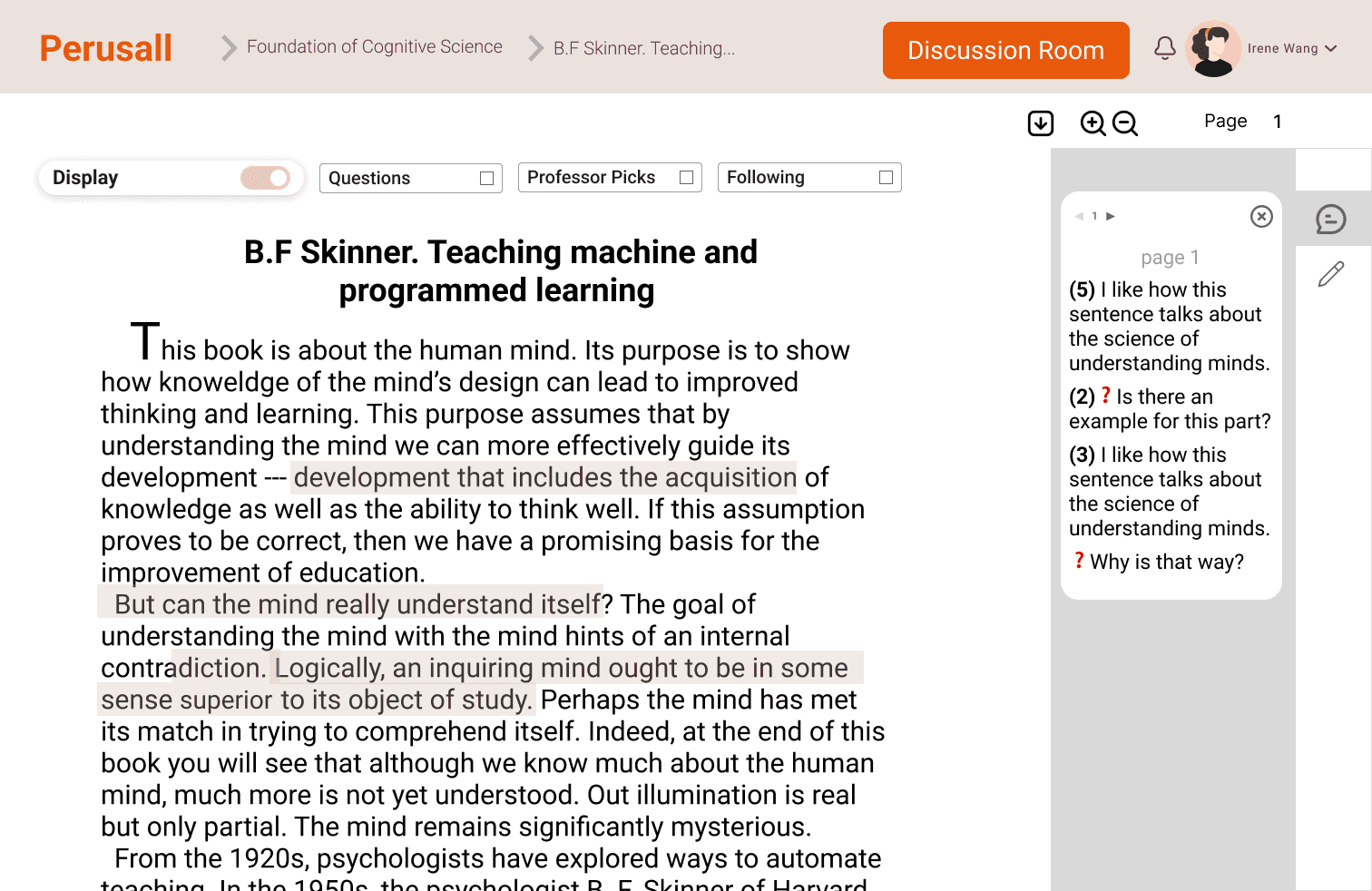
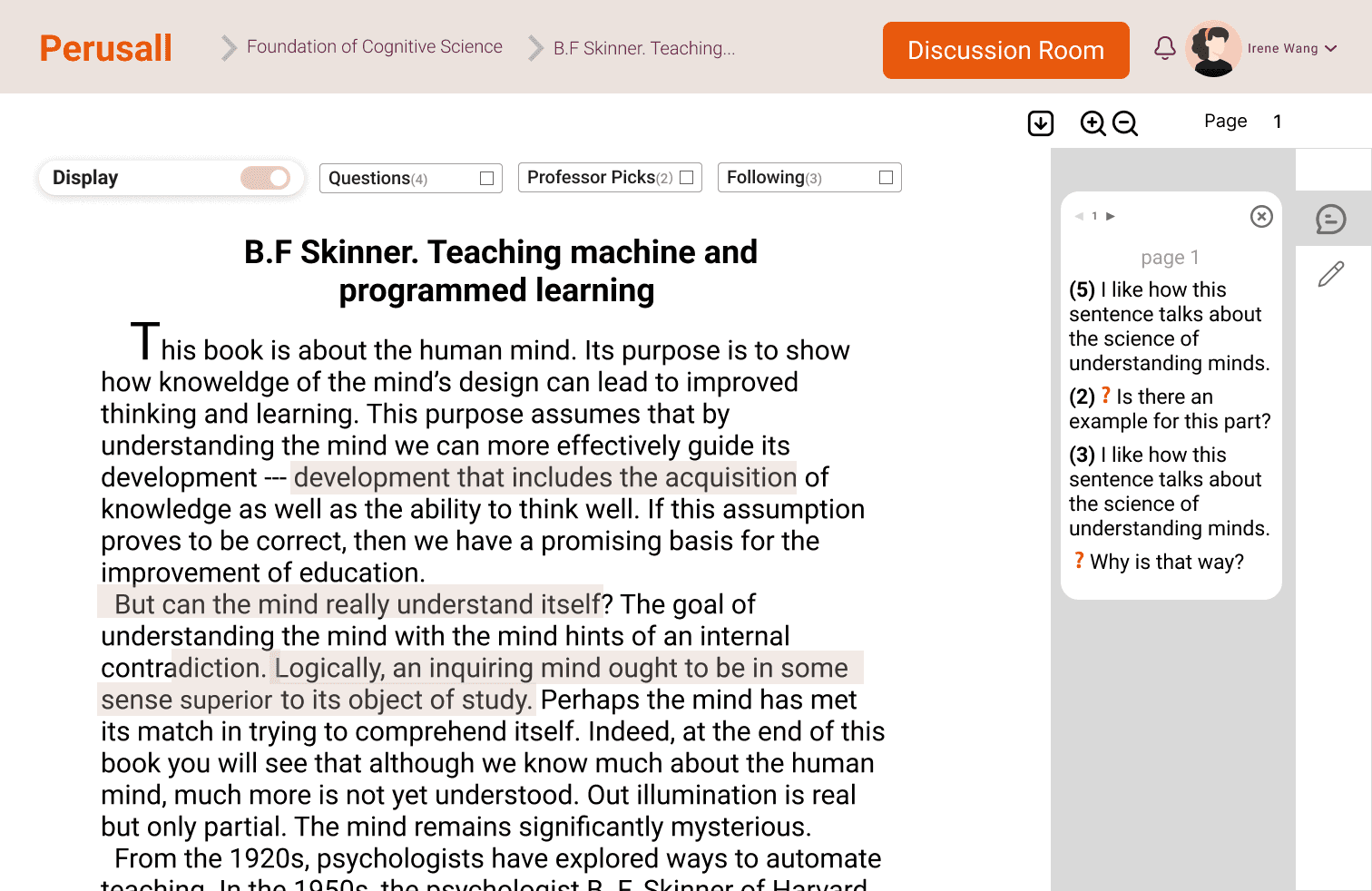
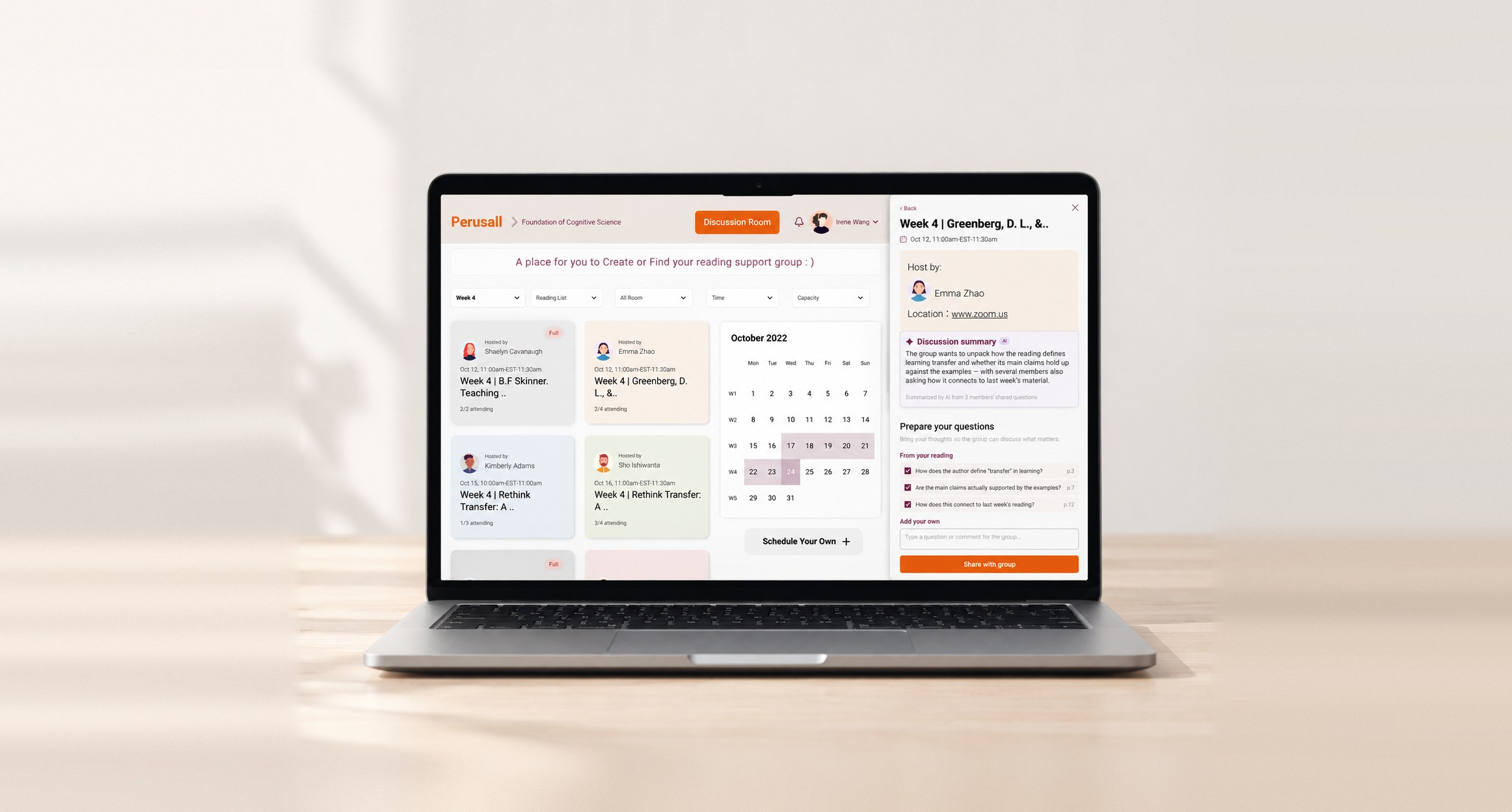
🔎 Add a filterable annotation system that preserves focus without sacrificing peer insights

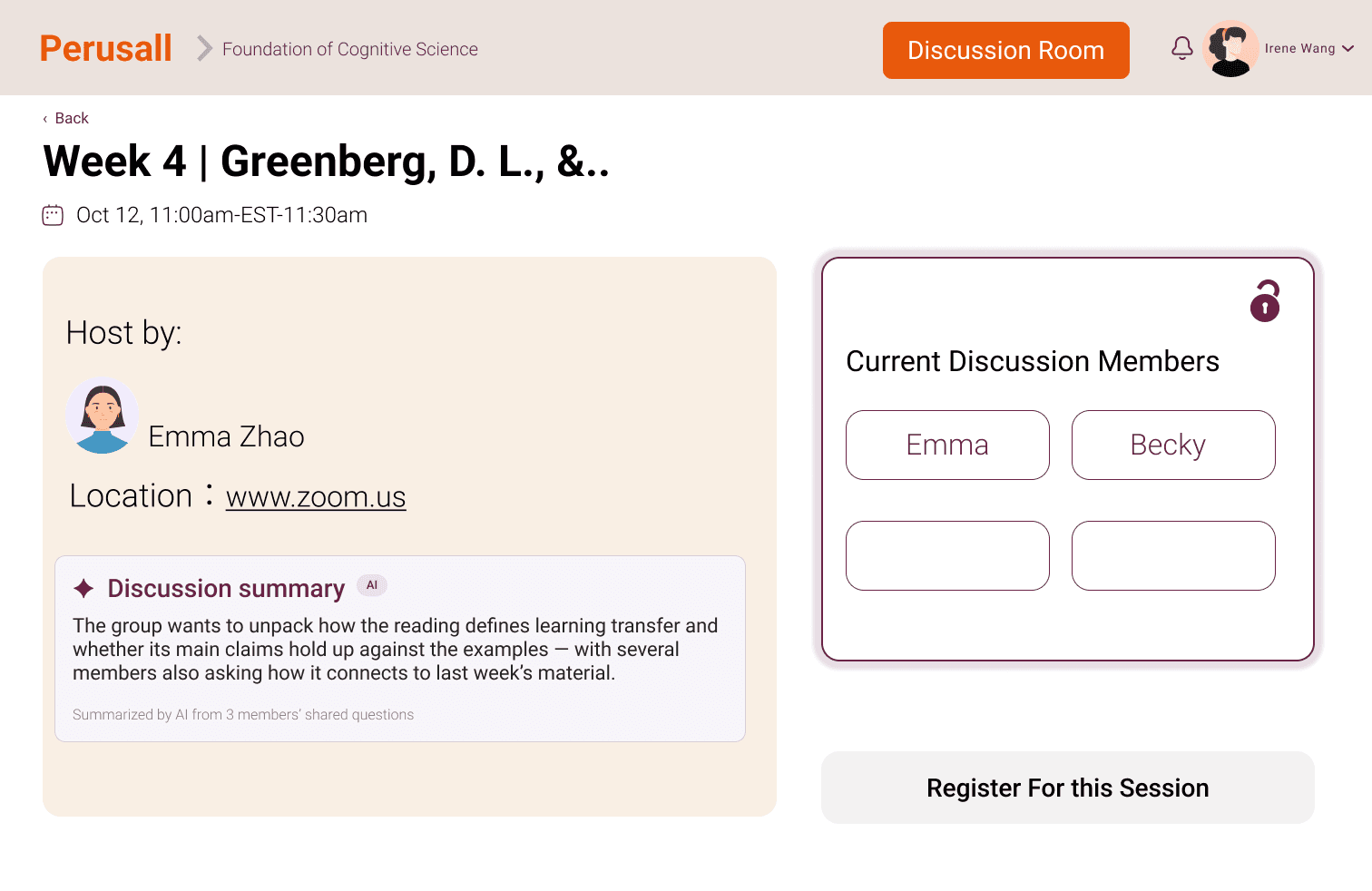
💬 Design a system supporting synchronous discussions

[03. Design solutions]

Since this project focuses on improving annotation workflows and introducing real-time discussion, the following mockups simplify Perusall's existing interface to highlight these two areas and communicate the proposed solutions more clearly.

Simplified version

[04. Usability Test & iterations]

We managed to have 3 students we interviewed before to do the usability tests. They provided positive feedback on the new features:

GOOD point

“I like that there is an option for me to turn off the annotations sometimes when I don't need it! I think the selective display mode is definitely helping me to better absorb others' annotations and the ”following” filter is interesting to have"

—Chloe

GOOD point

“I like the discussion room function because I can get the feedback immediatey. ”

—Steve

GOod point

“I wish Perusall could adopt your design! I like both features and it is pretty self-explanatory."

—Kris

They also raised a few questions to each feature:

[05. Metrics to warch]

In order to evaluate the effectiveness of added features, the following metrics are worth tracking and analyzing.

Metrics

Annotation filter usage rate

Reading completion rate

Discussion Room Participation Rate

Learning satisfaction score

What it measures

Adoption of filtering feature

Reading experience quality

Adoption of synch discussion

Improvement of comprehension

Rationale

If students frequently adjust annotation visibility, it suggests the filtering system is helping them tailor the reading experience to their needs.

Students reported that annotation overload disrupted reading flow. If the filter system reduces friction, students may be more likely to complete readings.

A high rate means seeing familiar faces or relevant peers influences attendance decisions

Satisfaction scores can help determine whether students perceive the new interaction model as beneficial.

[06. Reflection]

I started this project with the ambitious goal of creating an innovative tool that could provide students with significant relief when navigating large volumes of academic readings. Initially, I envisioned a platform capable of translating obscure words or offering direct links to explanations of specialized terms. However, while analyzing the survey and interview results, my attention shifted to how potential users discussed Perusall—a reading platform widely used in our program, yet one I had initially overlooked. Through my analysis of Perusall, I came to appreciate how effectively it addresses the real challenges faced by students and how intelligently it leverages collaborative learning to solve those challenges, which shifted our entire design goal from a brand-new tool to revamp Perusall.

This experience highlighted the importance of critically examining existing designs before attempting to innovate. Evaluating how users interact with current solutions—identifying what works well and what causes frustration—provides valuable insights into users’ needs and expectations. Such analysis inspires innovative approaches grounded in proven principles, ultimately leading to more effective and user-centered design solutions.

Create a free website with Framer, the website builder loved by startups, designers and agencies.